Texts From Your Club's Own Name — Plus One-Member Messages and a Searchable Archive
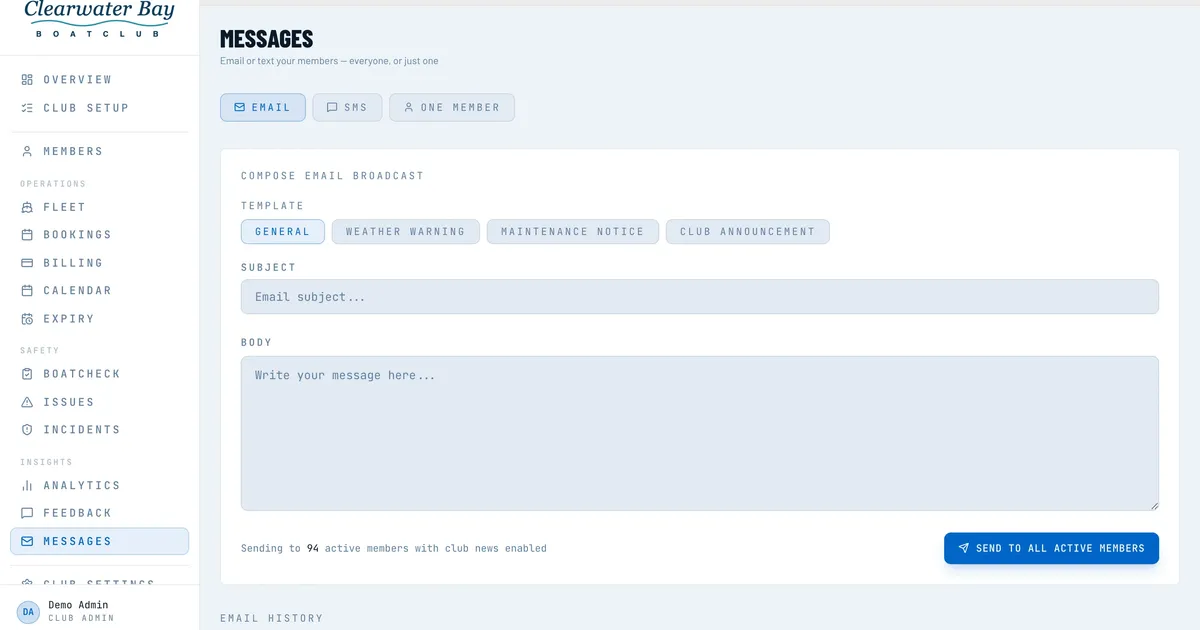
Set the sender name your texts arrive from, message a single member without a broadcast, see exactly who each text went to, and archive old messages with search.
Industry news for boat clubs and marinas, plus everything new in Nauticore.
Set the sender name your texts arrive from, message a single member without a broadcast, see exactly who each text went to, and archive old messages with search.
Members now get a text the moment they book — boat, date and start time at a glance — plus a reminder at 6pm the evening before their session.
Members who sign in from nauticore.co.uk are now handed over to your club's own web address, already logged in — the white-label experience is now complete end to end.

Committees argue in the dark about questions their own booking history already answers. Five worked examples, and how to pull each one in minutes.

A member's photo of a good day on the water is the best marketing a club owns. Collecting those photos and comments with recorded consent keeps that goodwill intact.

A membership waiting list looks like success and often behaves like a liability. How to run one honestly, keep prospects warm, and read the data that says whether to grow.

Blocking a boat out for liftout is easy. Doing it when members already hold bookings is where clubs slip. How conflict-aware blocking, prompt notice and a little goodwill keep the peace.

Fractional shares, syndicates, commercial boat clubs and community clubs compared: capital at risk, real access, exit routes and who ends up fixing the engine.
Type a question in plain English — "fuel cost by boat this year", "who no-showed most this season" — and get a chart back. Email it once, or schedule it weekly.

How to turn a WhatsApp group of enthusiasts into a working boat club in a single season, with the structure and habits to establish before growth makes them harder.

Youth sailing programmes rarely fail for want of enthusiasm. They fail on logistics — the availability, the records and the visibility that keep young sailors moving through.

Committees keep asking for an app. What members actually want is one tap from the home screen to a booking, and you can give them that without ever touching a store.

The retired, boat-owning clubhouse regular is aging out. The people arriving behave differently, and clubs that meet them halfway keep the community while fixing the plumbing.

A season-long plan for club messages: what to send each month, what only when it happens, which channel each deserves, and how to keep a record of every send.

A new member's first document from the club shouldn't be a payment reference. What belongs in a proper welcome pack, and why sending it automatically beats the well-meaning forwarded PDF.
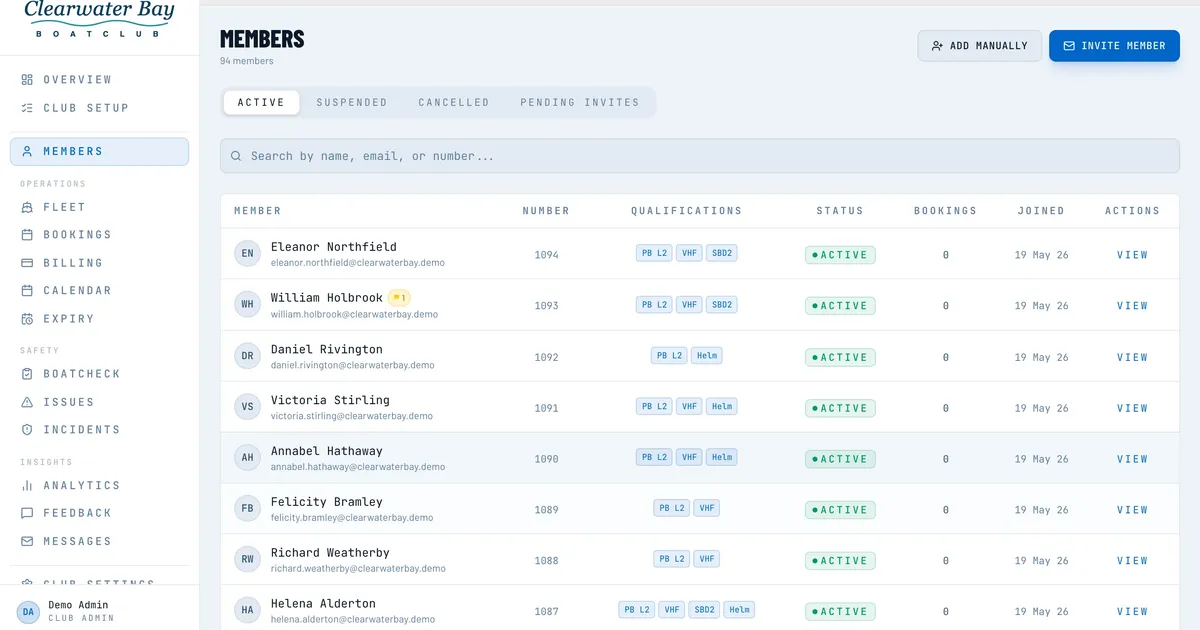
Get a full picture of every member — booking history, no-show trends, fuel spend, happiness scores, and reported issues, all in one place.

Five numbers settle the arguments that dominate boat club AGMs: utilisation, cancellations, no-shows, open issues and fuel recovery — and how to present them in ten minutes.
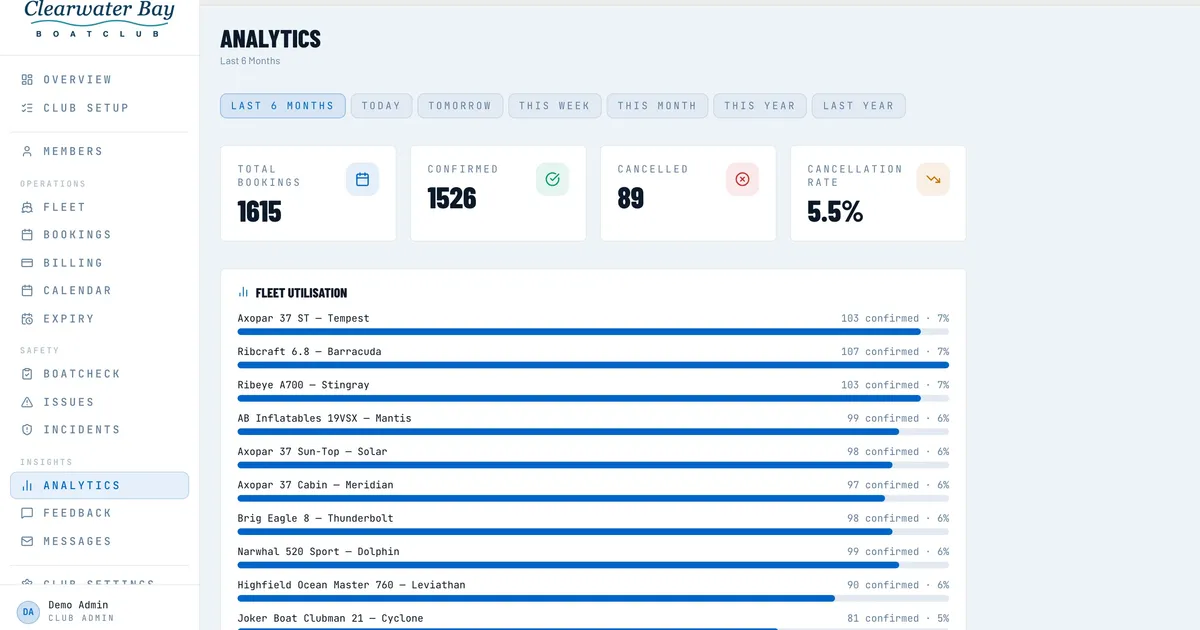
The admin analytics dashboard now includes an Issues Trends widget — spot problem boats instantly with stacked severity bars and a "Needs Attention" list.

Safety culture is what members do when nobody's watching. How volunteer boat clubs make good practice the easy option: quick pre-use checks, no-blame fault reporting and visible follow-through.
The Royal Yachting Association has issued updated guidance for club-operated motorboat fleets, with a new focus on pre-use inspection documentation and incident recording.

British weather will always drive cancellations. What matters is how clubs absorb them: forecasts at the point of booking, guilt-free early cancellation, and waitlists that re-fill freed slots fast.

Three golden slots a week and everyone wants them. How quotas, waitlists and visible availability keep July fair, and why the booking data belongs in November's fleet debate.
A new survey by the British Marine Federation shows that over 40% of UK marina and club berth bookings are now made digitally, up from 18% in 2023.

No-shows waste the one thing a club can't get back: the slot. Prevent them with reminders and easy cancellation, measure per member, and apply consequences by pattern, not incident.

Renewal season shouldn't be an archaeology project. A rolling expiry view, a three-step chase and booking rights that end with membership keep club renewals calm.

The four ways clubs split fuel costs on shared motorboats, why flat fees drive out light users, and why metering litres per trip and billing monthly is the model that keeps the peace.
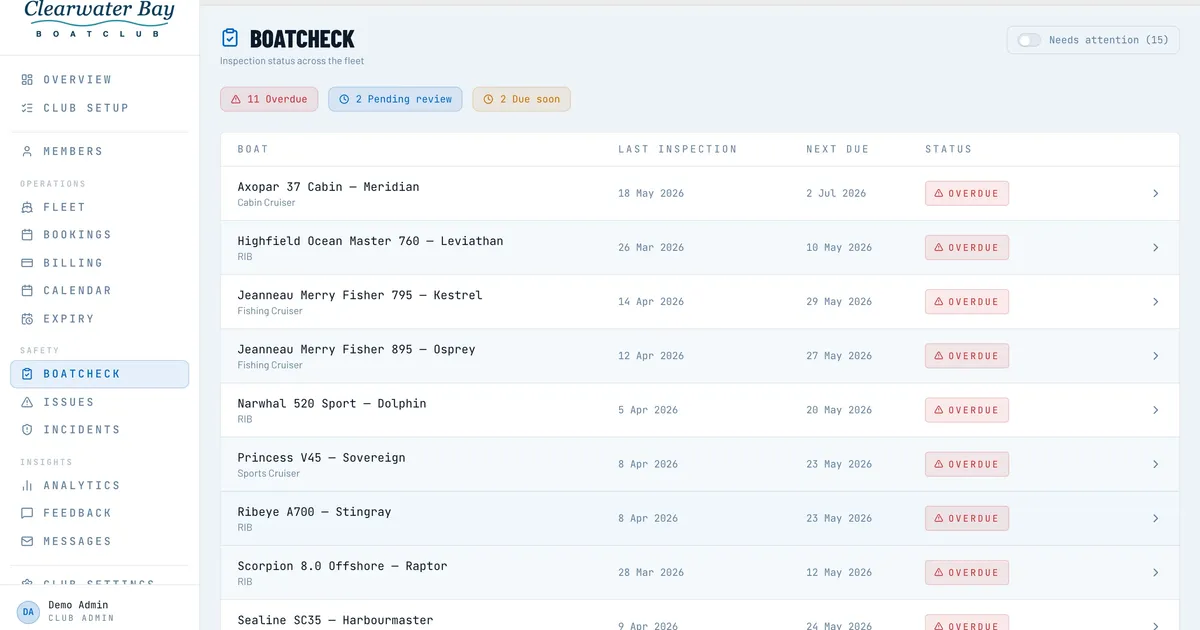
BoatCheck replaces paper inspection sheets with a structured digital checklist system, complete with photo evidence, sign-off workflows, and a full audit trail.

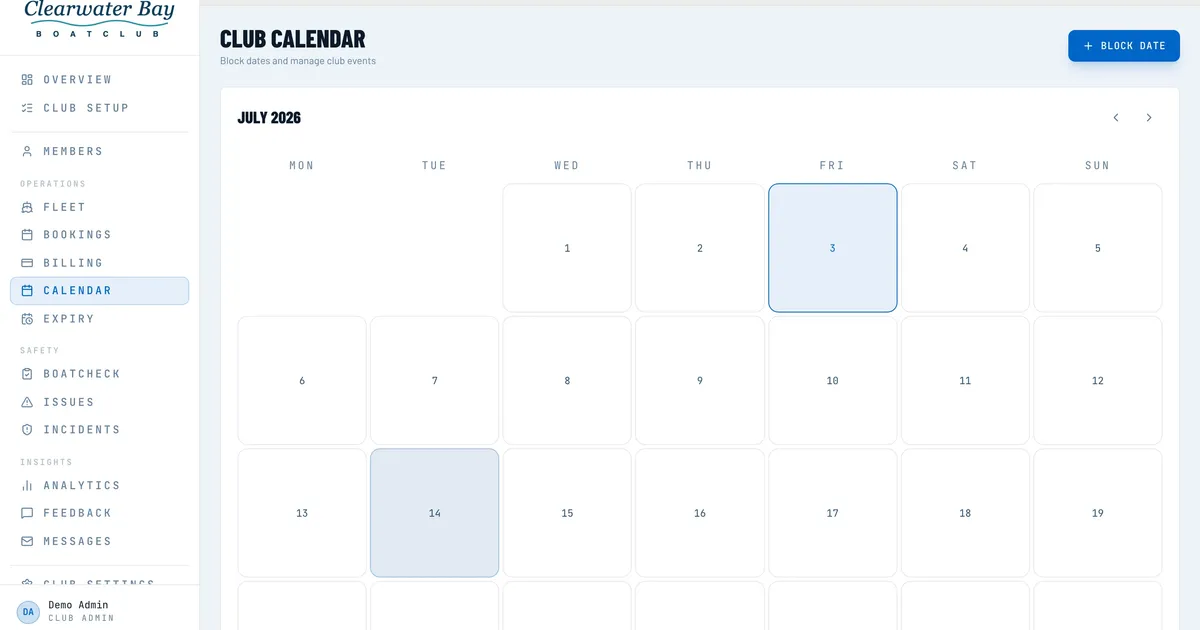
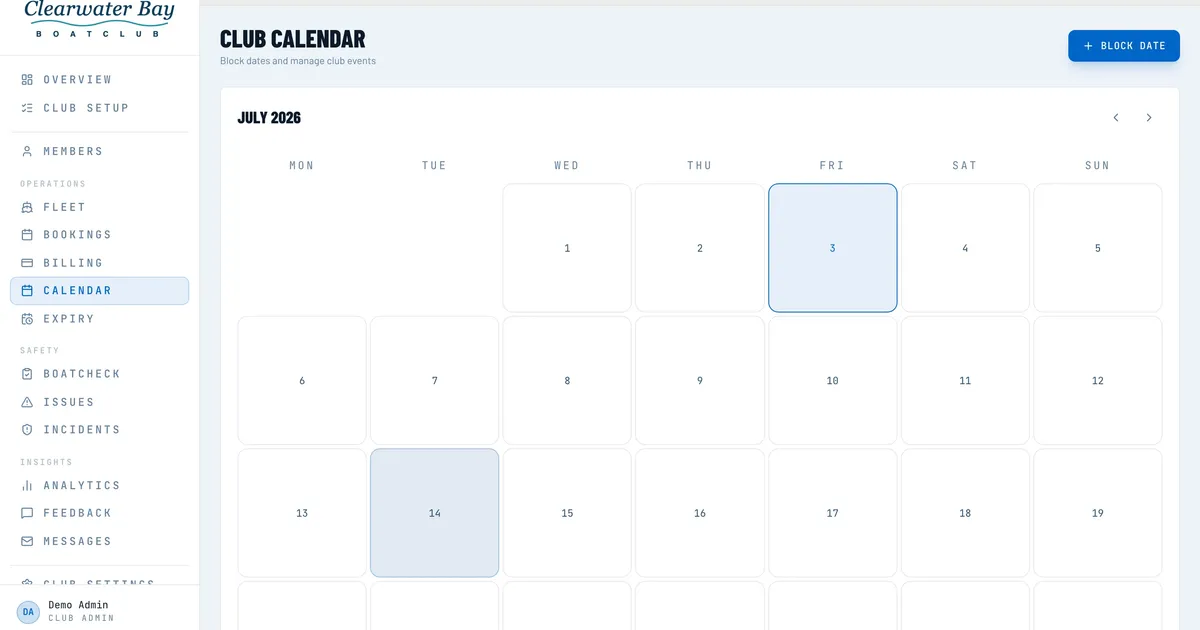
Maintenance always loses the calendar fight with a sunny Saturday. How to pick quiet windows from booking data, block dates properly and make sure affected members hear first.
Several leading UK marine insurers have updated their club fleet policies to require structured maintenance logs, with premium discounts available for clubs with auditable digital records.
Qualification records fail in three ways: never recorded, out of date, or not checked when it matters. Attach requirements to boats and let the booking system do the enforcing.

Documented safety practice is shifting from optional to expected, even for volunteer boat clubs. What a proportionate club safety management system looks like, and where to start.

After an incident, a smooth claim usually comes down to paperwork written before anyone needed it. What a defensible record trail looks like, and how a club keeps one as a habit.
Members can now attach photos when submitting post-trip feedback, making it far easier to document issues and share great moments from the water.

Volunteer-run clubs hold more personal data than they realise. What UK GDPR actually requires: lawful basis, real consent for texts, erasure done properly, and a record of who agreed to what.

Most small boat clubs still manage bookings via WhatsApp group. Here's why it's costing clubs time and members, and what better alternatives look like.

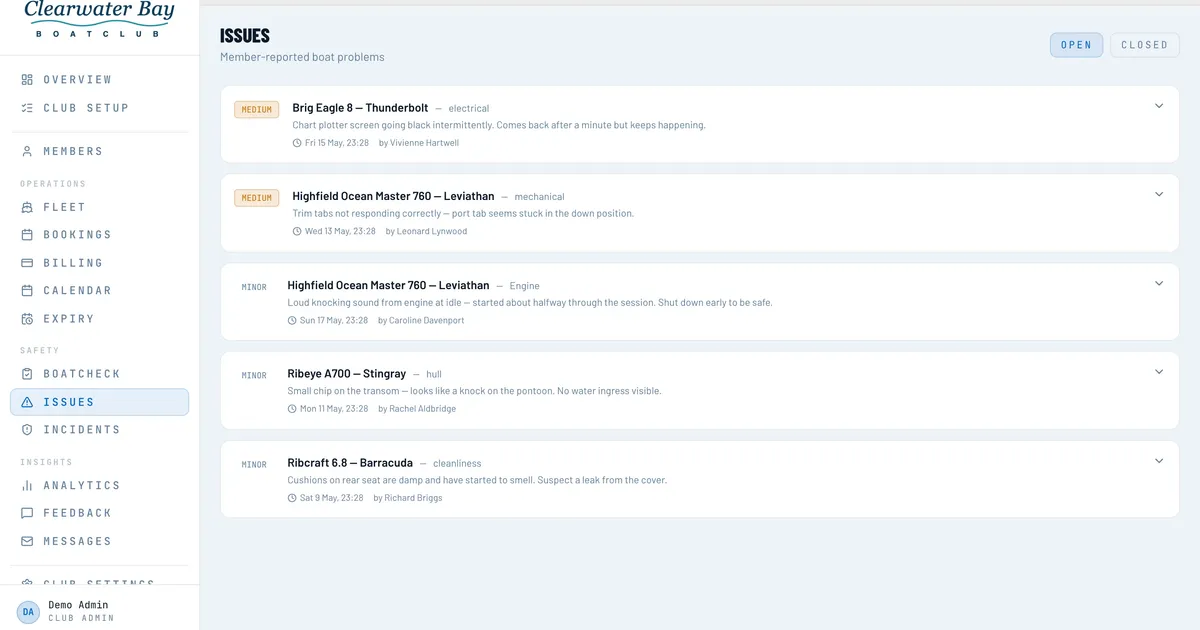
A three-tier triage discipline for boat clubs: what counts as minor, medium and urgent, who hears about each and how fast — so faults stop dying in the group chat.

A practical method for setting boat club membership fees: build the cost stack, divide by renewals you can defend, sense-check against charter prices, and put fuel on the meter.

Electric launches are arriving in club fleets one cautious purchase at a time. The honest operational picture: charging logistics, range planning, maintenance trade-offs and member training.
When a slot fills up, members can now join the waitlist. If a cancellation comes in, the next person gets a 30-minute window to accept automatically.

Member View lets admins browse the club as any specific member — same boats, same limits, same buttons. Most 'it works for me' support questions become a ten-second check.

Most of a club secretary's week isn't judgement, it's routing: booking requests, cancellations, weather questions and fuel chasing. A task-by-task audit of where the hours really go.

Inspection sheets in a damp drawer, qualifications in the secretary's memory. Why insurers, regulators and new volunteers are quietly ending the era of paper club records.

Fleet utilisation is the most useful number a boat club committee can watch, yet few clubs measure it. How to count it honestly, what distorts it, and how to act on the pattern.
Most boat clubs communicate with members through a single email account managed by one person. Here is why that creates problems — and how structured broadcast communications solve them.

New members decide whether to renew in their first month. A practical onboarding sequence for clubs: welcome pack, first booking inside a fortnight, qualification checks and spotting quiet drifters.

Berth fees are the biggest fixed cost in private boating, and in popular UK harbours they only move one way. Sharing one berth across dozens of members is the structural answer.

Every AGM, some club loses its operational memory because it lived in one volunteer's inbox. How to make handover a non-event: shared records, documented reasons, and a two-season test.

Twelve questions club committees should ask before buying fleet software, covering members’ experience, billing, data ownership and price — plus red flags and how to run a fair trial.

Clubs rarely fail with a bang. They fail when the third secretary in five years quits and nobody stands. Burnout is mostly logistics, and the fix is removing drudgery, not recruiting harder.

The spreadsheet is free the way a leaky hull is free. An honest accounting of what sheet-run clubs pay in secretary hours, lost fuel money, booking disputes and one-person dependency.

Every quota eventually meets a reasonable exception. Golden tickets let admins award a member extra booking slots deliberately and on the record, so one favour never becomes a precedent.

How to pick a notice period that protects other members' access without punishing honest cancellations — and why the booking system, not the secretary, should be the one enforcing it.

Ownership costs keep climbing while the appetite for time on the water holds. Why club fleets are becoming the default way into boating, and what that shift asks of the clubs that run them.
Building a native iOS and Android app costs tens of thousands of pounds and requires ongoing updates. Progressive Web App technology gives your members an identical experience at a fraction of the cost. Here is how it works.

The off-season is when good seasons are built. A practical winter checklist for boat club committees: fleet audits, maintenance windows, rule reviews, renewals and a February dry run.

Most clubs inherit booking rules nobody remembers choosing. The three levers that matter — quotas, booking windows and cancellation notice — and what each setting trades away.
Email open rates hover around 25%. SMS open rates exceed 95%. For time-sensitive club communications — weather warnings, maintenance alerts, last-minute slot availability — the channel you use matters.
The club spreadsheet is a beloved institution — and a liability. Here is what proper member management looks like in a platform built for boat clubs, and why the spreadsheet cannot do what you actually need.
No-shows are more expensive than they look. An empty boat slot is lost revenue and lost enjoyment for the members on the waitlist. Here is what the data shows about why they happen and how to reduce them significantly.

Almost every motorboat club has a paper pre-use checklist. Almost none of them produce reliable, actionable data. Here is what a digital vessel inspection system does differently.
Every booking, cancellation, and no-show at your club is data. Here is what fleet utilisation analytics actually looks like in practice — and what most clubs discover when they first see it.
Most boat clubs make decisions based on what the committee assumes members want. Post-trip feedback changes that. Here is what you learn when you start collecting structured member satisfaction data.
Most small boat clubs have no formal way to record near-misses and incidents. That changes your insurance position, your ability to improve safety, and potentially your legal exposure. Here is what a good system looks like.
Fuel billing is one of the most administratively painful parts of running a shared motorboat fleet. Here is how digital fuel logging solves the problem of manual tracking, end-of-month calculations, and member disputes.
Members making a booking should be able to see the forecast for their slot before they confirm. Here is why integrating live weather and tide data into your booking platform reduces no-shows and improves safety.


When a popular boat is fully booked, most clubs leave that slot permanently taken even when cancellations come in. An automatic waitlist changes everything — here is how it works and why it matters.
A step-by-step guide to moving your boat club from informal bookings to a proper online booking system — what to configure, how to get your members on board, and what to expect in the first month.
Almost every small boat club in the UK still manages bookings over WhatsApp. Here is exactly why that is costing you members, admin time, and money — and what a modern alternative looks like.