Texts From Your Club's Own Name — Plus One-Member Messages and a Searchable Archive
3 July 2026
Three golden slots a week and everyone wants them. How quotas, waitlists and visible availability keep July fair, and why the booking data belongs in November's fleet debate.
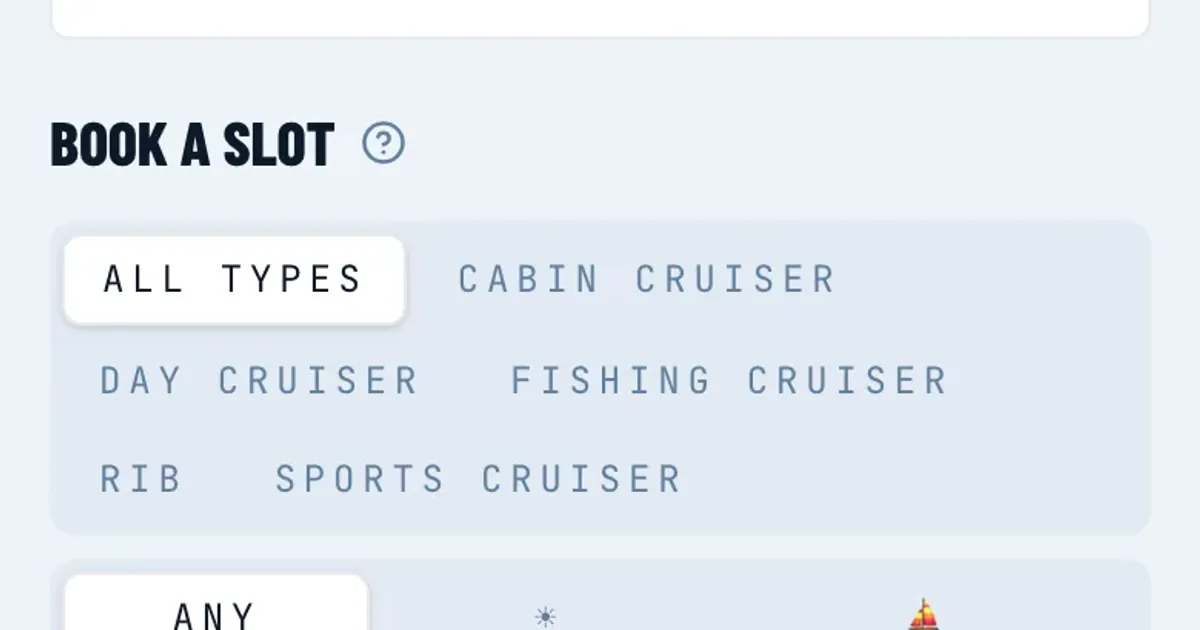
There is a version of your boat club that only exists in July. Same boats, same members, same booking rules as the February version, but the arithmetic is completely different. In February a Saturday morning slot sits empty half the time. In July it is gone within minutes of the booking window opening, and the member who missed it wants to know why.
Most clubs have, in effect, three golden slots a week: Saturday morning, Saturday afternoon and Sunday morning. Add school holidays and a decent forecast, and demand for those three can outstrip supply several times over. Everything else is negotiable. A Tuesday evening finds a taker or it doesn't; nobody writes to the committee about it. Managing peak season is really about managing those three slots without anyone concluding the system is rigged.
A quota of, say, two future bookings per member feels almost decorative in February. Nobody gets near it. Come July it is the only thing standing between fair access and a calendar owned by whoever checks their phone at midnight. Which is exactly when the pressure to bend it arrives: a member with visiting grandchildren, a member who always used to just take a boat out, a committee member who feels the rules are for other people.
Here is the asymmetry worth explaining at the AGM. A February exception costs nothing, because the slot next to it was empty anyway. A July exception costs a real booking that a real member would have made, and they will notice. One quiet favour in peak season does more damage to trust in the system than a dozen in winter.
If the club genuinely wants to grant extra access for long service, for hours put into the winter refit, or for a new member worth keeping, do it openly, as a recorded extra allocation, not a nod at the bar. Members forgive generosity they can see. They do not forgive discovering it by accident.
Peak weeks are also cancellation weeks. Plans collapse, weather shifts, someone's crew drops out on Friday night. In a club run on a paper diary or a WhatsApp group, a Saturday slot freed at 9pm either goes to whoever happens to be staring at their phone, or dies quietly while the boat sits on the mooring and three members grumble at home.
A working waitlist turns that leak back into supply. A member finds the slot full, joins the list in one tap, and gets on with their week. When the cancellation lands, the first person in line is offered the slot automatically and given a short window to claim it before it passes to the next. Nauticore does this by email and text with a thirty-minute claim window, and the detail matters less than what the mechanism removes: nobody on the committee has to referee, and nobody can claim the slot went to a mate.
Not everyone who books Saturday morning needs Saturday morning. Some do — young children, crew who work weekdays, tide-dependent plans. Plenty of others book it out of habit, because it is the slot everyone books.
Those flexible members will redirect themselves, but only if they can see the alternative. When the calendar shows Saturday solid and Sunday afternoon wide open, a retired member or a shift worker will often take the open water without being asked. When availability lives in a diary on the clubhouse windowsill, nobody redirects, because nobody knows.
The second half of this is plain evangelism. Talk up the quiet slots at the bar and in the newsletter: the empty Tuesday evening with the harbour to yourself, the Thursday morning with flat water and no queue at the pontoon. Every member you convert to midweek is a member who stops competing for the golden three, and their bookings do more for your utilisation figures than any committee initiative will.
The fleet debate happens in November, months after the pressure has gone, and memory is a terrible witness. The member who missed two Saturdays remembers a summer of never getting a boat. The member who sailed every Tuesday remembers no problem at all. Both will speak with conviction.
Booking data settles it. Utilisation by boat, bookings by day of week, the morning and afternoon split — if Saturdays ran at capacity for eight straight weeks while midweek sat a quarter full, the honest answer is demand-spreading, not a fourth boat. If everything ran hot, you have the beginnings of a purchase case a treasurer can actually vote on. Either way the argument is about numbers on a screen, not about who tells the best story.
So treat July as an experiment you only get to run once a year. Hold the quota line, let the waitlist mop up cancellations, make the empty slots easy to see, and count everything. The season will still be busy. It just won't be bitter.
See it in action
All Nauticore features are live in the interactive demo — no signup required.