Texts From Your Club's Own Name — Plus One-Member Messages and a Searchable Archive
3 July 2026
No-shows waste the one thing a club can't get back: the slot. Prevent them with reminders and easy cancellation, measure per member, and apply consequences by pattern, not incident.
The forecast was decent, the boat was booked, and at ten past nine on Saturday morning it was still sitting on its mooring. The member who reserved it never arrived, never cancelled, and never mentioned it afterwards. Two other people had wanted that slot. Nothing about this is unusual, and nothing about it is malicious either — which is exactly what makes no-shows so awkward to deal with.
The instinctive response is a fines list. The better one is a policy built in three layers: prevention first, measurement second, consequences last, and only ever applied by pattern.
A booking slot is the scarcest thing a shared-fleet club has. Boats can be added, members recruited, subscriptions raised. A fine Saturday morning in June exists once and never again.
A cancellation, even a late one, is recoverable. If a member pulls out two days ahead, the slot goes back on the calendar and someone on the waitlist picks it up; even the evening before, it can often be rescued. A no-show is different, because it is only discovered after the slot has started. By the time anyone notices the boat is idle, the people who would happily have taken it out are mowing the lawn.
There is a quieter cost too. Members who keep seeing booked-out boats sitting unused stop trusting the calendar, and a calendar nobody trusts breeds exactly the defensive over-booking it was meant to prevent.
Most no-shows are not selfishness. They are a booking made twelve days ago that quietly fell out of somebody's head. Treat forgetfulness as the primary cause and two fixes follow.
First, remind people the evening before. Around 6pm is the sweet spot: late enough that tomorrow's plans are real, early enough that a member who can no longer make it can still release the slot for someone else to claim. A text does this job better than an email, because texts get read the same evening.
Second, make cancelling almost embarrassingly easy. If releasing a slot means ringing the bosun and explaining yourself, plenty of members will quietly do nothing instead — nobody enjoys that phone call. Cancellation should be two taps on a phone, no conversation required, no guilt attached. Every barrier you remove from cancelling is a no-show you never have.
Committees run on anecdotes, and anecdotes name the wrong culprits. The member everyone "knows" is unreliable may have no-showed once, memorably, on a regatta weekend; the quiet member nobody suspects may have missed four slots since April.
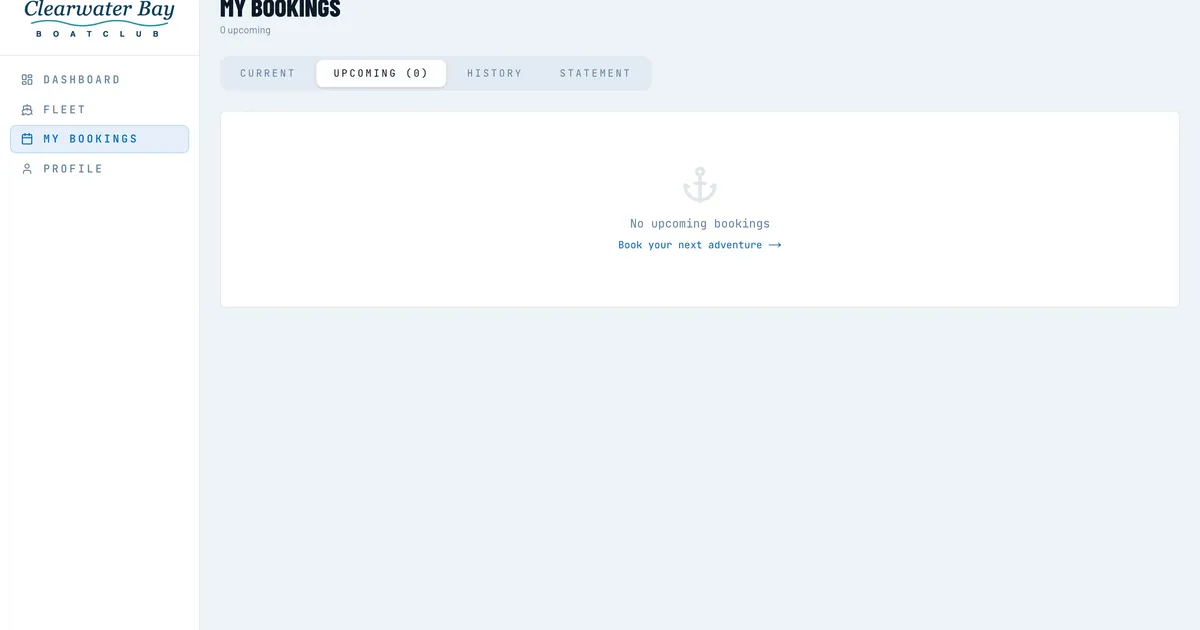
So count. Track no-shows per member across the season, not per incident. The numbers usually deliver two surprises: the problem is smaller than the grumbling suggests, and it is concentrated in a handful of people rather than spread across the membership. That changes the job from policing forty members to having three conversations. Fleet software makes the counting trivial — Nauticore, for example, keeps a no-show rate on every member's profile alongside their booking history, so the pattern is visible before anyone has to argue from memory.
When prevention has done its work and the numbers point at a genuine pattern, respond in steps:
The conversation stage matters more than it looks. It is where you discover the member with a genuine week from hell: the bereavement, the hospital appointment, the car that died on the M27. A policy applied by pattern absorbs one terrible week without comment. A policy applied by incident punishes it, and that is how clubs lose good members over things that were never really about the club at all.
Write the ladder down. Put it in the welcome pack, on the noticeboard and in the members' area of whatever system you run. Two sentences will do: what counts as a no-show, and what happens at each step.
Publication does two jobs at once. Members cannot claim they were singled out, because the same ladder applies to the commodore as to the newest joiner. And the volunteer who has to have the awkward third-stage conversation is protected too — they are pointing at a page the club agreed at the AGM, not pursuing a grudge.
Review it once a year. If no-shows have dwindled to almost nothing, say so in the newsletter and thank people. A policy that hardly ever fires is not a failed policy. It is the whole idea working.
See it in action
All Nauticore features are live in the interactive demo — no signup required.